Introduction: Why Beneficial Ownership Transparency is a Global Imperative
In a complex business environment, identifying the true owner becomes important. Beneficial ownership transparency has become a priority for governments, regulators, banks and investors. These institutions are paying closer attention to understanding who really owns, controls operation and benefits from the organization.
Hidden ownership is used to conceal ownership, money laundering, tax evasion, and terrorism financing. Many international regulatory bodies emphasize assessing beneficial ownership while entering a business to mitigate the risk of financial crime and improving accountability.
What Is an Ultimate Beneficial Owner (UBO)?
An Ultimate Beneficial Owner (UBO) is a real and natural person who owns, operates, and gains from the profit of a business or a legal arrangement, regardless of whose name the company is officially listed on the paperwork. Any individual who directly or indirectly owns more than 25% of a company’s share, influence decisions over the company’s financial and operational decisions is considered to be a UBO.
UBO Definition Under Indian Company Law
Under the Indian Company Law, the Ultimate Beneficial Owner (UBO) is referred to as a Significant Beneficial Owner (SBO) and is governed by the Section 90 of the Companies Act, 2013. SBO refers to any individual who, acting alone, together, or through one or more people/trusts, possesses:
- Owns not less than 10% of the company’s share or voting rights
- Participate in not less than 10% of the total distributable dividends or any other distribution through indirect ownership
- Influences significant decision making or control over the company, even if they hold no direct shares or voting rights.
UBO Thresholds: When Does Ownership Trigger Disclosure?
To identify a UBO, regulators have set certain ownership or control thresholds. Once an individual crosses these limits, their details must be disclosed.
| Country | Threshold | Regulations |
|---|---|---|
| India | 10% | Companies (Significant Beneficial Owners) Rules, 2018 |
| United States of America | 25% | Corporate Transparency Act (FinCEN) |
| European Union | 25% | 4th/5th AMLD across EU Member States |
| United Kingdom | 25% | People with Significant Control (PSC) Register |
| Japan | 25% | Act on Prevention of Transfer of Criminal Proceeds |
Natural Person vs Legal Entity: Tracing to the Ultimate Human Owner
Understanding the difference between a Natural Person and a Legal Entity is essential when applying the UBO definition. A natural person refers to an individual, while a legal entity includes companies, trusts, or other organizations with a separate legal identity. In the context of ultimate beneficial ownership in India, the UBO must always be a natural person, not a company or entity.
Although shares may be held by legal entities, UBO disclosure in India requires companies to identify the real individual behind these structures. This ensures compliance with beneficial owner company law and promotes transparency.
Tracing ownership involves looking through multiple layers of legal entities to identify the individual who ultimately owns or controls the business. This process includes analyzing shareholding, voting rights, and controlling mechanisms across all levels.
If no natural person can be clearly identified, companies are required to designate a senior managing official as a fallback UBO, as per regulatory requirements.
Why UBO Identification Matters
AML and KYC Compliance Obligations:
UBO identification plays an important role in Anti-Money Laundering (AML) and Know Your Customer (KYC) compliance. Businesses, especially financial institutions, are required to verify the identity of their customers and understand who truly owns or controls them.
Sanctions Screening and PEP Risk:
Even if a company appears legitimate, its ultimate owner may be on a sanctions list or hold a high-risk political position. By tracing ownership, businesses can detect hidden risks and avoid engaging with restricted or high-risk individuals that may pose a future threat to the operations.
Preventing Shell Company Abuse and Layering:
Shell companies and complex ownership structures are often used to hide illegal activities through a process called layering, where transactions are spread across multiple entities to avoid detection. By identifying the real owner, authorities can uncover hidden connections and reduce the risk of financial crimes.
Regulatory Enforcement and Penalties for Non-Disclosure:
Governments worldwide have made UBO disclosure a legal requirement. Companies that do not disclose accurate information may face fines, legal action, or restrictions on business operations.
UBO in Complex Corporate Structures
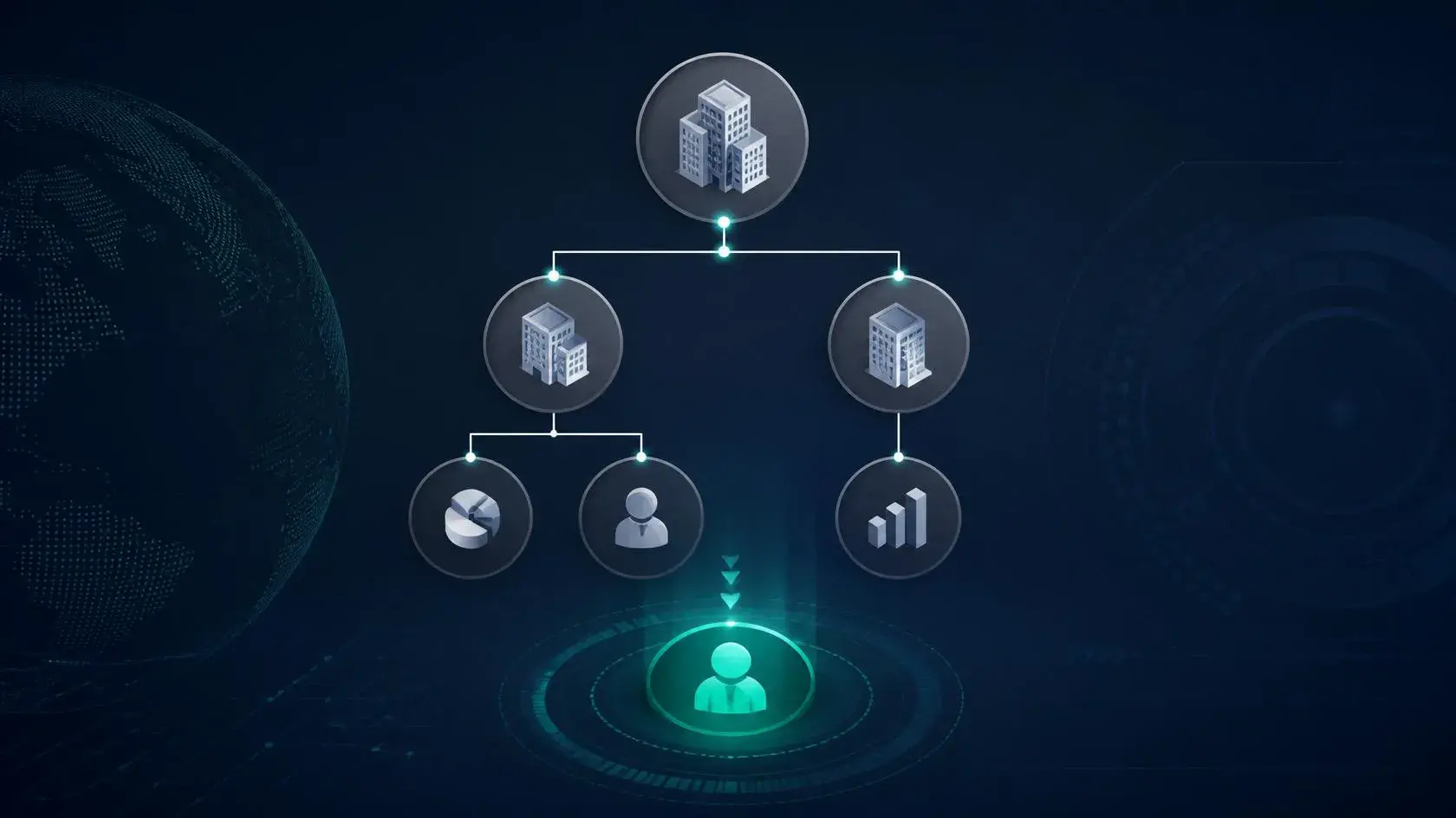
Identifying the Ultimate Beneficial Owner (UBO) becomes more challenging in complex corporate structures, where ownership is spread across multiple layers of entities, often in different jurisdictions. These structures may include holding companies, subsidiaries, trusts, and partnerships with the motive to separate legal ownership from actual control.
Multi-Layered Holding Structures and Offshore Entities:
Ownership is often spread across multiple companies and jurisdictions, including offshore entities. To identify the UBO, each layer must be analyzed to get the ultimate natural person. These structures can reduce transparency, which is why detailed disclosure is required.
Nominee Shareholders and Nominee Directors:
Nominees act on behalf of the real owner but do not have actual control. Even if they appear as official owners, the UBO is the person behind decision making.
Trusts, Foundations, and Collective Investment Vehicles:
In these structures, ownership is not always straightforward. UBO identifies the settler, trustee, and beneficiaries to determine who ultimately controls or benefits from the assets.
Joint Ventures and Consortium Structures:
In joint ventures, ownership is shared between multiple parties; each stake must be assessed to identify individuals with significant ownership or controls, even when no single party has full ownership.
UBO Disclosure Requirements in India
In India, the Ultimate Beneficial Owner (UBO) disclosure mandates that any natural person who ultimately controls, owns or receives benefits from a company must be disclosed to the regulatory authorities.
Companies Act 2013 and MCA Significant Beneficial Owner (SBO) Rules:
Under the Companies Act, 2013, a company is required to identify Significant Beneficial Owners (SBOs). An individual is considered an SBO if they hold 10% or more ownership or control. Companies must maintain an SBO register, collect declarations from such individuals, and file the details with the Ministry of Corporate Affairs (MCA).
PMLA and RBI Guidelines on Beneficial Ownership:
Under the Prevention of Money Laundering Act (PMLA) and RBI Guidelines, banks and financial institutions must identify UBOs as part of KYC and AML compliance. The rules require institutions to verify the natural person behind an entity, with thresholds typically around 10–25% depending on the entity type.
SEBI Regulations on UBO Disclosure for FPIs and Investment Entities:
Securities Exchange Board of India (SEBI) mandates that Foreign Portfolio Investors (FPIs) and investment entities identify and disclose UBOs based on the economic interest, ownership, and control. This is enforced to prevent misuse of offshore routes and engage in illicit activities.
How to Conduct UBO Identification: A Practical Framework
Identifying the Ultimate Beneficial Owner (UBO) in India requires a structured approach to ensure accuracy and compliance. The following steps provide a simple framework that companies can follow:
Step 1: Map the Ownership and Control Structure
Understanding the company’s ownership and control structure is the first step. It involves identifying all shareholders, parent entities, and intermediaries involved. This includes both direct and indirect ownership layers, as well as individuals who may exercise control through voting rights or decision-making authority.
Step 2: Apply the Threshold Test
Next, apply the relevant ownership thresholds (such as 10% or 25%) to determine which individuals qualify as UBOs. Combine direct and indirect holdings to calculate total ownership. Also consider individuals who have significant control, even if they fall below the numerical threshold.
Step 3: Screen Identified UBOs Against PEP and Sanctions Databases
Once the UBOs are identified, screen them against Politically Exposed Person (PEP) lists and sanctions databased. This helps detect any high-risk individuals and ensures the company does not engage with restricted or flagged people.
Step 4: Obtain and Verify Supporting Documentation
Finally, collect and verify supporting documents such as identity proofs, ownership records, and declarations. This step ensures that the information is accurate, up to date, and compliant with regulatory requirements.
UBO Challenges in the Indian Market
Identifying ultimate beneficial ownership in India can be complex due to layered ownership structures and diverse regulatory requirements. Many businesses operate through multiple entities, making it difficult to trace the ownership in line with the accepted UBO definition to the ultimate natural person.
One of the major challenges is the use of indirect ownership and nominee arrangements, which can hide the real business owner and complicate UBO disclosure in India. Additionally, differences between frameworks such as the Companies Act, PMLA, RBI and SEBI regulations can create confusion around thresholds and reporting requirements under beneficial owner company law.
Another issue is incomplete and outdated data, as companies may fail to regularly update their UBO records. Cross-border ownership further adds complexity, especially when entities are based in jurisdictions with limited transparency.
Overall, businesses in India must navigate regulatory overlap, data gaps, and complex structures to ensure compliance with UBO disclosure requirements in India.
Technology and UBO Verification: What Tools Can and Cannot Do
In the context of ultimate beneficial ownership in India, technology plays a key role in improving the accuracy and efficiency of UBO identification. Various compliance tools and platforms help organizations streamline UBO disclosure in India by automating ownership mapping, risk screening, and record-keeping.
These tools are effective for:
- Mapping complex ownership structures
- Screening individuals against PEP and sanctions databases
- Maintaining compliance records under beneficial owner company law
- Monitoring changes in ownership data
However, technology has limitations. It relies on the availability of accurate data, which may be incomplete in multi-layered or cross-border structures. It may also struggle to identify indirect control or nominee arrangements, which are critical in determining the true UBO definition in practice.
Therefore, while technology supports UBO verification, it must be combined with human judgment and regulatory understanding.
Conclusion
Understanding ultimate beneficial ownership in India is important for ensuring transparency and compliance with changing regulatory regulations. A clear UBO definition, along with identifying and reporting, helps organizations meet UBO disclosure requirements and reduce financial and regulatory risks.
With frameworks under Companies Act, PMLA, and SEBI regulations, businesses must align with beneficial owner company law and maintain accurate ownership records. Ultimately, effective UBO identification helps prevent financial crimes, strengthen compliance, and build trust in the corporate ecosystem.